Technical SEO helps your website perform better on search engines, ensuring that search engines can easily find, understand, and rank your content. But doing a technical SEO audit can be time-consuming and complicated. In the past, SEO audits involved manually checking things like broken links, slow page speeds, and mobile usability across your website. This could take days, especially for larger websites.
Now, Artificial Intelligence (AI) is changing the rules. AI tools can speed up the process, help you find more problems, and even suggest solutions. In this blog, we will discuss how AI is making technical SEO audits faster, easier, and more effective.
Traditional SEO Audit Process: Time-Consuming and Labor-Intensive
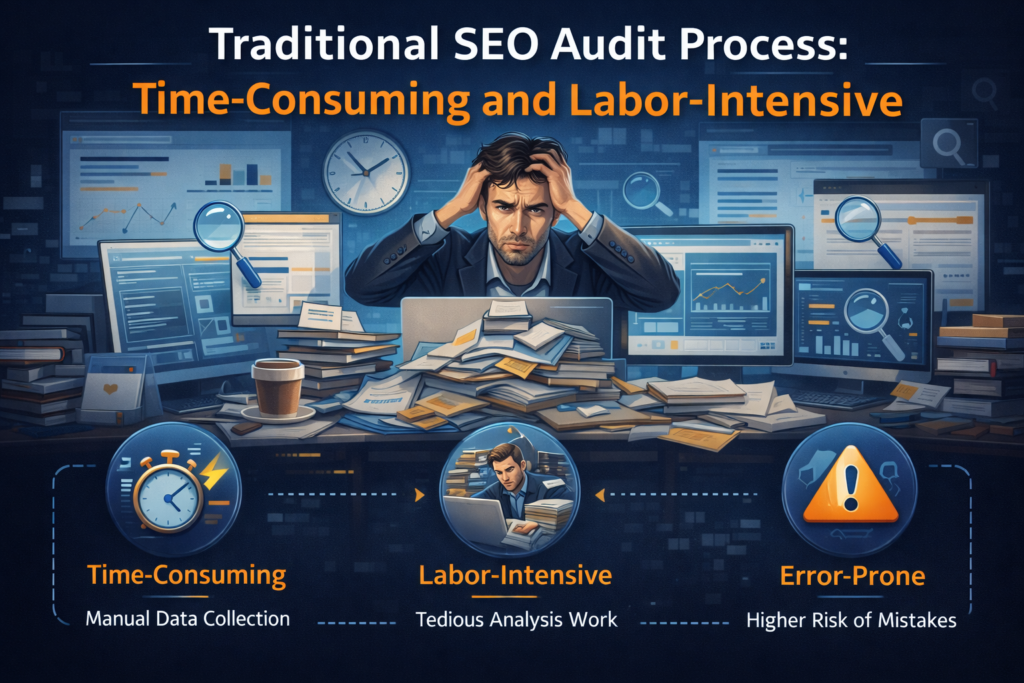
A traditional SEO audit requires manually reviewing your website to find and fix various technical issues that could affect your site’s performance on search engines. This process typically identifies the following problems:
1. Broken Links
Broken links are also known as 404 errors. When a link on your website points to a page that no longer exists or has been moved without a proper redirect. Users can become frustrated by broken links, as they may find themselves on error pages rather than the content they were expecting.
2. Slow-Loading Pages
Website speed is a critical factor for both user experience and SEO. If your pages take too long to load, visitors may leave before the page even finishes loading, leading to a high bounce rate. Slow-loading pages also negatively affect search engine rankings, as Google and other search engines prioritize fast websites in their results.
3. Missing Meta Tags
Meta tags are small snippets of text that describe a page’s content and appear in search engine results. Key meta tags include the meta title and meta description. These tags help search engines understand the content of a page and play an important role in SEO rankings.
4. Poor Mobile Optimization
The trend of mobile searches overtaking desktop searches makes having a mobile-friendly website essential. Poor mobile optimization can result in a website that looks great on a desktop but is difficult to navigate on smartphones or tablets. This can lead to frustrated visitors who may leave your site for a competitor.
5. Incorrect Redirects (301, 302 Errors)
Redirects are used to send users and search engines to a different URL than the one they initially requested. For example, when a page has been moved to a new URL, a 301 redirect ensures that visitors and search engines are sent to the correct page. However, incorrect or broken redirects can cause issues.
6. Duplicate Content
You should avoid having duplicate content on your site, whether it comes from similar pages, other sources, or different versions of the same page (like www vs. non-www). SEO rankings can be negatively affected. Some pages may be ignored by search engines because they don’t know which version to rank.
Challenges of Traditional SEO Audits
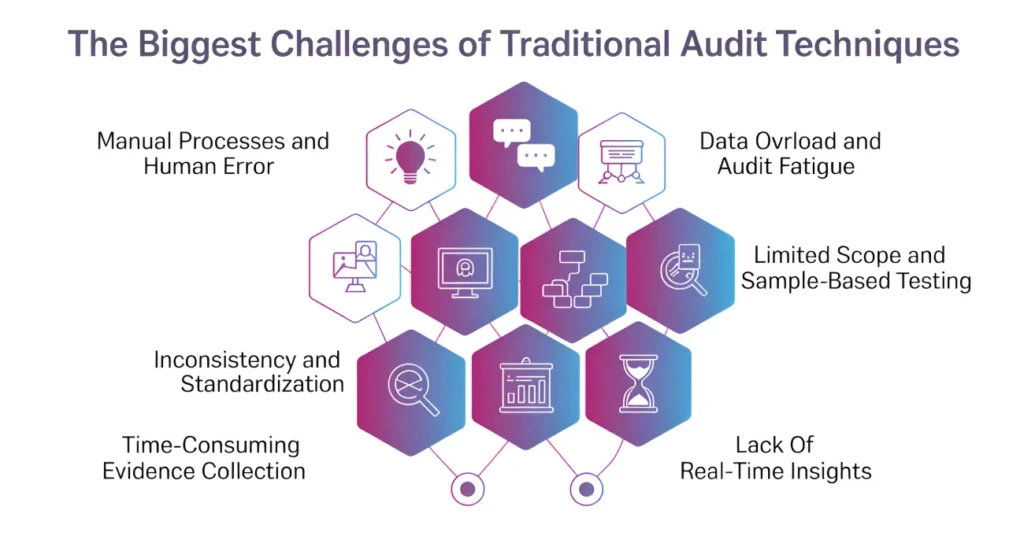
Traditional SEO audits can identify these problems, but they have several limitations:
- Time-Consuming: Checking each page of a website for issues can take a lot of time, especially for larger sites.
- Manual Effort: Most of the work has to be done by hand, meaning it’s easy to miss issues or overlook important details.
- Limited Scope: Traditional audits may miss more complex or hidden issues, particularly with larger sites or those with frequent updates.
How AI is Improving Technical SEO Audits
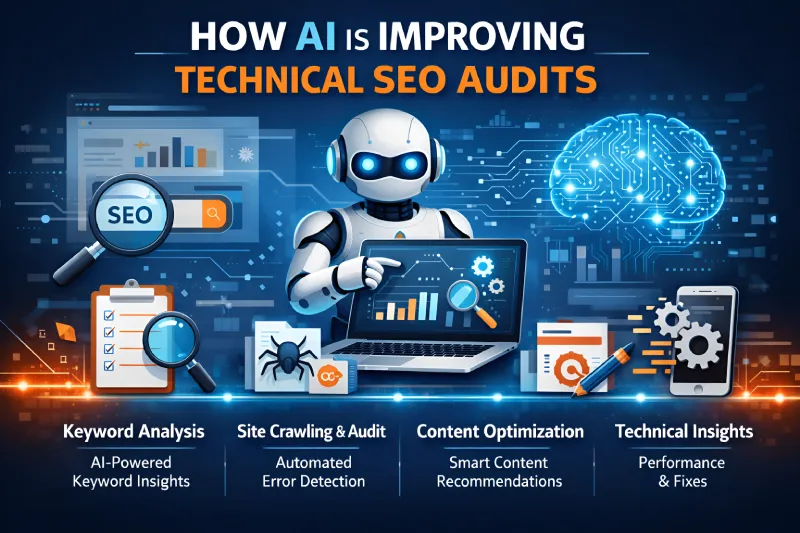
1. Automated Issue Detection
AI tools can automatically check your website for issues, saving you hours of work. Instead of manually going through each page, AI can quickly find problems like:
- Broken links
- Missing meta tags
- Duplicate content
- Slow page speeds
- Poor mobile usability
Tools like Screaming Frog, Sitebulb, and DeepCrawl use AI to do all this for you. This means you can find issues faster and fix them quicker.
2. Prioritizing Issues for Faster Fixes
Not all issues are equally important. AI can help you figure out which problems to fix first. For example, a page that takes too long to load can hurt your rankings more than a missing image alt tag.
3. Predicting Future Problems
AI can do more than just find current issues; it can also help you predict future problems. AI tools look at patterns in your website’s data and warn you about issues that could come up later. For example, it might suggest adding keywords, improving page speed, or fixing meta tags. This makes it easier to take action and improve your website.
4. Crawling Websites More Efficiently
Crawling a large website manually can be slow and exhausting. AI-powered tools make crawling more efficient, meaning they can check your entire website quickly while using less server power.
5. Making Smarter Decisions with Data
AI is great at looking at lots of data and spotting patterns. It helps you understand your website’s SEO performance and identify issues that you might have missed. AI tools give you data-driven insights.
Popular AI Tools for Technical SEO Audits

Here are some of the most popular AI tools that can help with technical SEO audits:
- Screaming Frog
- DeepCrawl
- Sitebulb
- Frase
- Surfer SEO
Future of AI in Technical SEO Audits
As AI continues to get smarter, we can expect even better tools. The future of AI in SEO audits could more effective. AI is already helping make SEO audits faster, smarter, and more efficient. As the technology improves, it will continue to play a bigger role in making your website perform better on search engines.
Key takeways
AI is changing the way we do technical SEO audits. It helps find problems faster, prioritize fixes, and offer data-driven solutions. By using AI tools, SEO professionals can conduct audits more efficiently, fix important issues first, and stay ahead of potential problems.Ready to improve your SEO with AI? Contact Loyal SEO Agency to learn how AI-powered tools can help boost your website’s performance and search rankings, faster than ever!