Think Smart, Rank Smart- Use LSI Keywords for Better SEO
In a constantly changing world of SEO, utilizing and knowing LSI keywords remains critical to smarter content optimization in 2026. But what exactly are LSI keywords, and why do they matter for your SEO strategy? In this blog post, we will go over the meaning and use of Latent Semantic Indexing (LSI) as well as its best practices in order to improve your site ranking for search and offer up content that is even more relevant.
What is LSI (Latent Semantic Indexing)?
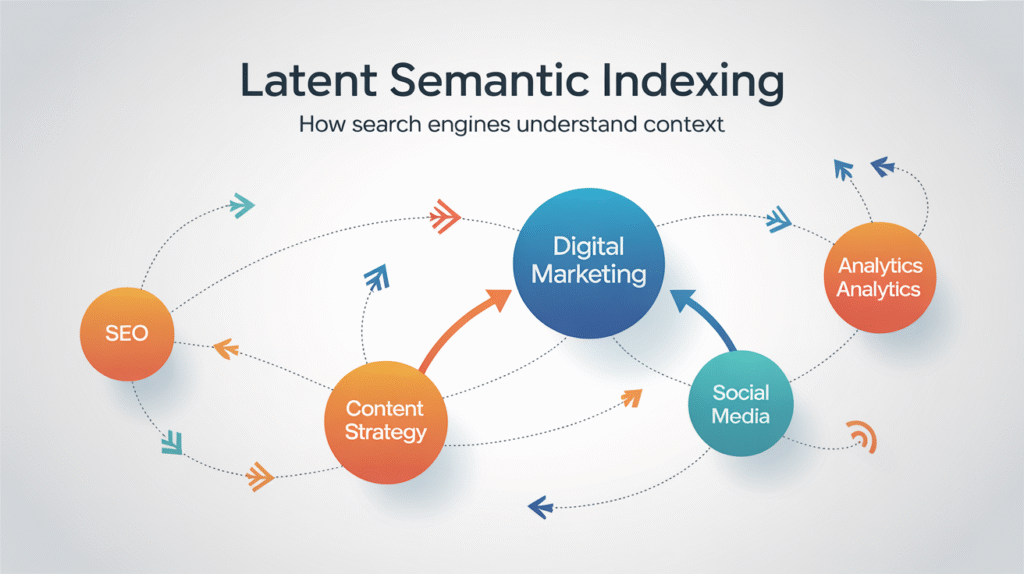
LSI is a term that means Latent Semantic Indexing, and it’s a method search engines use to determine the context of words within an article and their relationships with one another. Instead of just using exact matches, LSI finds latent semantic indexing keywords – those terms and phrases that are related to your primary keyword conceptually. This is to suggest that Google draws lines between that single keyword and related phrases to figure out even more what your page is about.
LSI Keywords: Meaning and Definition
LSI keywords meaning includes words or phrases that relate to the topic, but add more information to understand it well. For instance, if my main keyword is “Best SEO Agency,” my LSI keywords include ”Best SEO company, Affordable SEO services, SEO firm, Search engine optimization specialists, SEO agency near me.”These keywords will help search engines determine whether you are writing about the SEO agency and services. The definition of LSI keywords focuses on optimizing the semantic significance by adopting associated language to add greater topical relevance in your content.
What Are LSI Keywords And How Do They Impact SEO?
From an SEO angle, latent semantic indexing keywords are important because they provide Google and other search engines with the context that they need to understand what your content is about. This provides more accurate indexing of business rules as opposed to just keyword density alone. Building latent semantic indexing SEO techniques into what you’re doing is about strengthening the relevancy of your content and its authority, which will positively influence your rankings.
How to Find LSI Keywords
Finding LSI keyword isn’t complicated. You’ll find these related terms naturally with different SEO tools, helping you search for them. The trick is to naturally include latent semantic indexing keywords in your articles that will prevent keyword stuffing but still keep it readable. Some popular methods include:
- Use tools like LSI Graph, Google Keyword Planner, and SEMrush.
- Looking at related searches at the bottom of Google results.
- Examining highly-ranked results for terms and phrases that are related.
Why 2026 is the Year of LSI Keywords
As search engines improve, we have Google’s RankBrain & BERT, which are now much more focused on semantic keywords and user intent. They also favor answers that address questions broadly and in context. In 2026, success with SEO hinges heavily on something other than just your target keywords – how well you incorporate LSI keywords and make the content more useful for the user.
In 2026, smart marketers are utilising these latent semantic indexing keywords to:
- Ensure their content covers a topic holistically.
- Increase content authority and usefulness.
- Avoid restrictions associated with overusing one keyword.
Benefits Of Using LSI Keywords To Optimize Content
There are a number of good reasons why you should use Latent Semantic Indexing or LSI keywords:
- Better Search Engine Understanding: Search engines like to see content that is filled with all kinds of words related to your primary keyword.
- Improved User Experience: Content is more readable and interesting when it naturally incorporates related words.
- Better Rankings: LSI keywords are regularly outranking pages optimized for the exact-match keyword.
- Reduced Keyword Stuffing Risk: Allows for natural use of keywords, maintaining readability and SEO integrity.
Latent Semantic Indexing Google Overview
Google uses LSI to keep focus on exact matches, which often leads search engine spiders and web crawlers to misunderstand the content. Instead, it’s looking at that larger semantic approach, which involves latent semantic indexing Google algorithms to understand relevance, user intent, and content quality.
For example, if you write an article about “digital marketing,” Google can recognize that related keywords such as “SEO,” “content strategy,” or even “social media marketing” refer to the same topic area, so long as “digital marketing” (the exact keyword) is not used throughout the content a lot.
Google is much better at determining relevance, user intent, and content quality based on latent semantic indexing. It discovers actual relationships between words to bring more accurate search results to users. So instead of keyword stuffing, creators are supposed to write rich, context-based content that directly answers a searcher’s questions.
In other words, Google’s LSI approach helps its search engine think more like a person reading your piece; it analyzes topics as well as keywords. This process has concluded in contemporary SEO prioritizing value, clarity, and context over just keywords.
Summarizing LSI Keyword in 2026
Knowing what LSI is and how to use latent semantic indexing keywords can change your SEO and content strategy in 2026. And by using LSI keywords as part of your natural content, you created a rich, semantics-rich post which is user centric and perfect for modern search engines.
Now is the time to research your main keywords and fill your content with semantic terms. That’s going to make your SEO smarter, your content more logical, and your website even more visible on search engines.