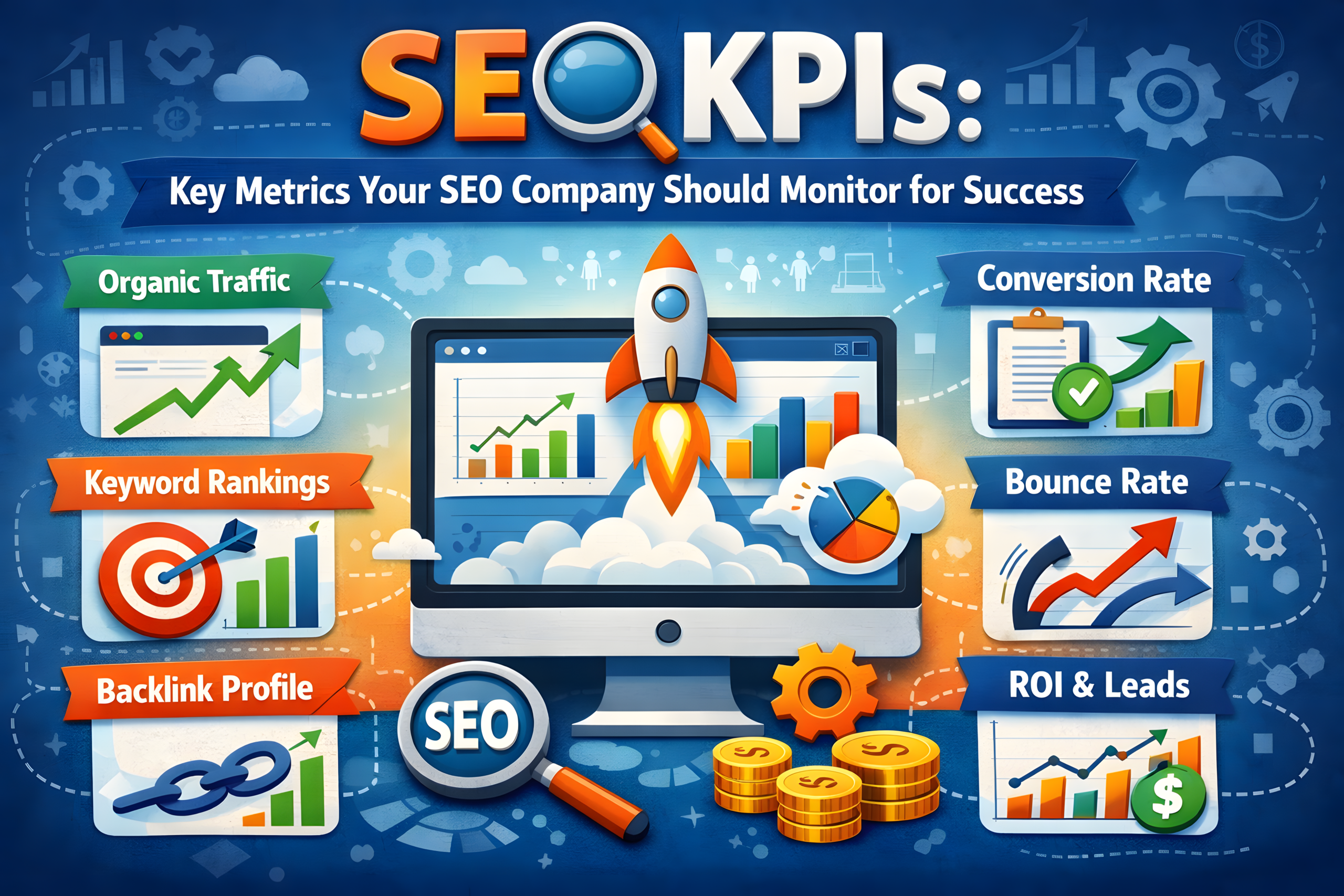
In the world of SEO, tracking the right metrics is crucial to understanding your performance and improving your strategies. One of the most effective ways to measure SEO success is by using SEO KPIs (Key Performance Indicators). These KPIs help businesses track the effectiveness of their SEO efforts and adjust strategies accordingly.
In this blog, we’ll explore the most important SEO KPIs that every business should monitor in 2026, explain the difference between SEO metrics and KPIs, and offer tips on how to optimize for these critical indicators to achieve long-term SEO success.
What are SEO KPIs?
SEO KPIs are measurable values that help businesses track the effectiveness of their SEO strategies. Unlike general SEO metrics that only measure performance or traffic, KPIs provide actionable insights into whether your SEO efforts are driving the desired business outcomes.
These outcomes might include more website traffic, higher conversion rates, increased engagement, or better rankings on search engine results pages (SERPs).
In short, SEO KPIs help determine the effectiveness of your SEO campaigns by connecting your SEO actions to business goals.
Common Examples of SEO KPIs:
- Organic traffic growth
- Click-through rates (CTR)
- Bounce rate
- Conversion rate
- Keyword rankings
- Backlink quality
- Page load time
Why SEO KPIs Matter
Understanding and tracking SEO KPIs is crucial for evaluating the success of your SEO campaigns. These KPIs help you gauge whether your efforts are aligned with your overall business goals, and if they’re driving tangible results. Without KPIs, you’re simply guessing about what works.
1. Measure SEO Success:
KPIs allow you to objectively assess the performance of your SEO strategies. By regularly tracking key indicators, you can understand what’s driving results and what needs improvement.
2. Optimize SEO Strategy:
Tracking the right KPIs enables you to tweak your SEO strategy over time. If certain KPIs are underperforming, you can focus on improving those areas, whether it’s content, on-page SEO, technical SEO, or backlinks.
3. Connect SEO Efforts with Business Goals:
By tracking KPIs that are tied to business outcomes (like conversions), you can directly connect your SEO work with your bottom line. It makes it easier to measure ROI and justify SEO spending.
Key SEO KPIs to Track in 2026
Now, let’s dive into the most important SEO KPIs that your SEO company should track to ensure success in 2026:
1. Organic Traffic
Organic traffic refers to the visitors who land on your site from search engine results, excluding paid search. This is one of the most important KPIs as it directly reflects your website’s visibility and success in attracting visitors through search.
- How to Measure: Use Google Analytics to monitor the number of organic visitors over a specific period.
- Why It’s Important: More organic traffic means your content is being found by users searching for topics relevant to your business.
2. Bounce Rate
The bounce rate measures the percentage of visitors who leave your site after viewing only one page. A high bounce rate can indicate that users didn’t find the content they were looking for or that the page didn’t meet their expectations.
- How to Measure: You can track bounce rate in Google Analytics.
- Why It’s Important: A high bounce rate suggests that visitors aren’t finding your content engaging, which can negatively impact your SEO performance.
3. Click-Through Rate (CTR)
CTR refers to the percentage of people who click on your link after seeing it in search results. If your page ranks highly but doesn’t get clicked, it means that your meta description, title tags, or overall content aren’t engaging enough.
- How to Measure: Use Google Search Console to monitor CTR for each of your keywords and pages.
- Why It’s Important: A high CTR shows that your content is appealing to users, which helps improve your rankings and traffic.
4. Conversion Rate
The conversion rate tracks the percentage of website visitors who complete a desired action, such as signing up for a newsletter or making a purchase.
- How to Measure: Set up conversion goals in Google Analytics to track specific actions on your site.
- Why It’s Important: Higher conversion rates mean your website is not only attracting traffic but also turning that traffic into customers or leads.
5. Keyword Rankings
Monitoring your keyword rankings is vital to understanding how well your content is performing in search results. Tracking keyword rankings for both short-tail and long-tail keywords will help you see where you’re gaining visibility and where you need to improve.
- How to Measure: Use SEO tools like SEMrush, Ahrefs, or Moz to track your keyword rankings.
- Why It’s Important: Higher keyword rankings typically lead to more traffic and higher visibility in search results.
Technical SEO KPIs
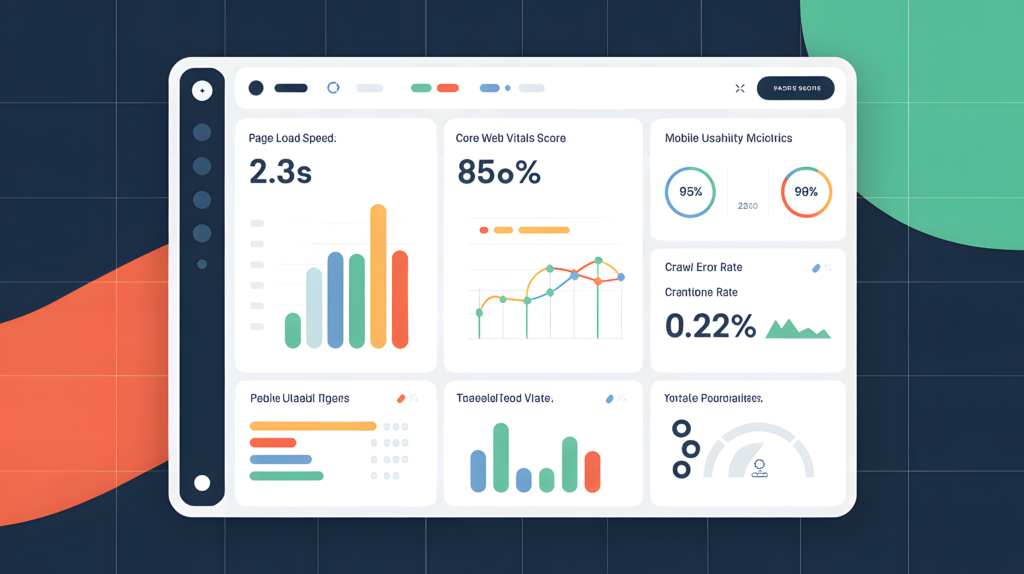
In addition to the above content-focused KPIs, it’s essential to monitor technical SEO KPIs to ensure your website is optimized for both search engines and users.
1. Page Load Time
Page load time is the time it takes for your page to load completely. Slow-loading pages can harm user experience and SEO rankings.
- How to Measure: Use tools like Google PageSpeed Insights or GTmetrix to test page speed.
- Why It’s Important: Faster websites provide a better user experience and are favored by Google in search results.
2. Crawl Errors
Crawl errors occur when search engines can’t properly access your web pages. These errors can prevent pages from being indexed and affect your search rankings.
- How to Measure: Use Google Search Console to identify and fix crawl errors.
- Why It’s Important: Addressing crawl errors ensures that Google can index all important pages of your site.
The Difference Between SEO Metrics and KPIs
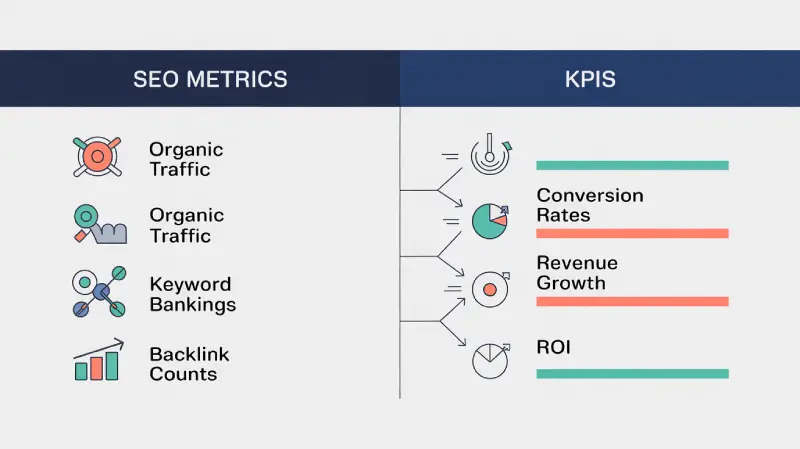
SEO metrics and KPIs are not the same. Metrics are data points that help you measure performance (like pageviews or bounce rate), while KPIs are specific metrics that are tied to business goals (like conversions or organic traffic growth).
In essence, KPIs are the most important metrics that reflect your SEO success. While metrics can tell you about individual aspects of your SEO campaign, KPIs help you assess the overall effectiveness of your strategy.
How to Create SEO Content that Delivers Marketing KPIs
Creating SEO content that aligns with your marketing KPIs is critical for achieving long-term business success. Here are a few tips:
- Focus on Search Intent: Create content that answers specific questions or solves problems that your audience is searching for.
- Include Clear CTAs: Incorporate calls-to-action (CTAs) that encourage visitors to take meaningful actions, such as signing up for a newsletter or purchasing a product.
- Optimize for Conversions: You need to ensure your content is optimized for conversions, not just rankings. This involves writing content that resonates with your audience and encourages them to take action.
Best Dashboard Tools to Monitor SEO KPIs
To track these KPIs effectively, it’s essential to use the right dashboard tools:
1. Google Analytics
Google Analytics offers insights into traffic, bounce rate, and conversion rates, making it an essential tool for tracking SEO KPIs.
2. Google Search Console
Use Google Search Console to monitor keyword rankings, CTR, and crawl errors, helping you track the health of your SEO efforts.
3. SEMrush, Ahrefs, and Moz
These popular SEO tools provide detailed insights into keyword rankings, backlinks, site health, and competitor analysis.
4. Google Data Studio
Google Data Studio allows you to create customized dashboards that integrate data from multiple sources (like Google Analytics and Google Search Console).
Conclusion
In 2026, SEO KPIs remain an essential aspect of any digital marketing strategy. By tracking the right metrics, both content-based and technical, businesses can ensure their SEO efforts are aligned with business goals and delivering measurable results.
At Loyal SEO Agency, we help businesses create SEO strategies that focus on the right KPIs to drive organic traffic, conversions, and revenue. If you need assistance in optimizing your SEO strategy or tracking your KPIs, get in touch with us today to get a customized SEO plan tailored to your business goals.