Artificial intelligence has changed the way people create online content. AI writing tools can generate blog posts, product descriptions, and social media captions within seconds. For many marketers, this feels like a shortcut to scaling content production.
But there is a problem. Many websites publish large volumes of AI generated content and still struggle to rank in search results. Traffic stays low, engagement is weak, and the content fails to compete with stronger pages.
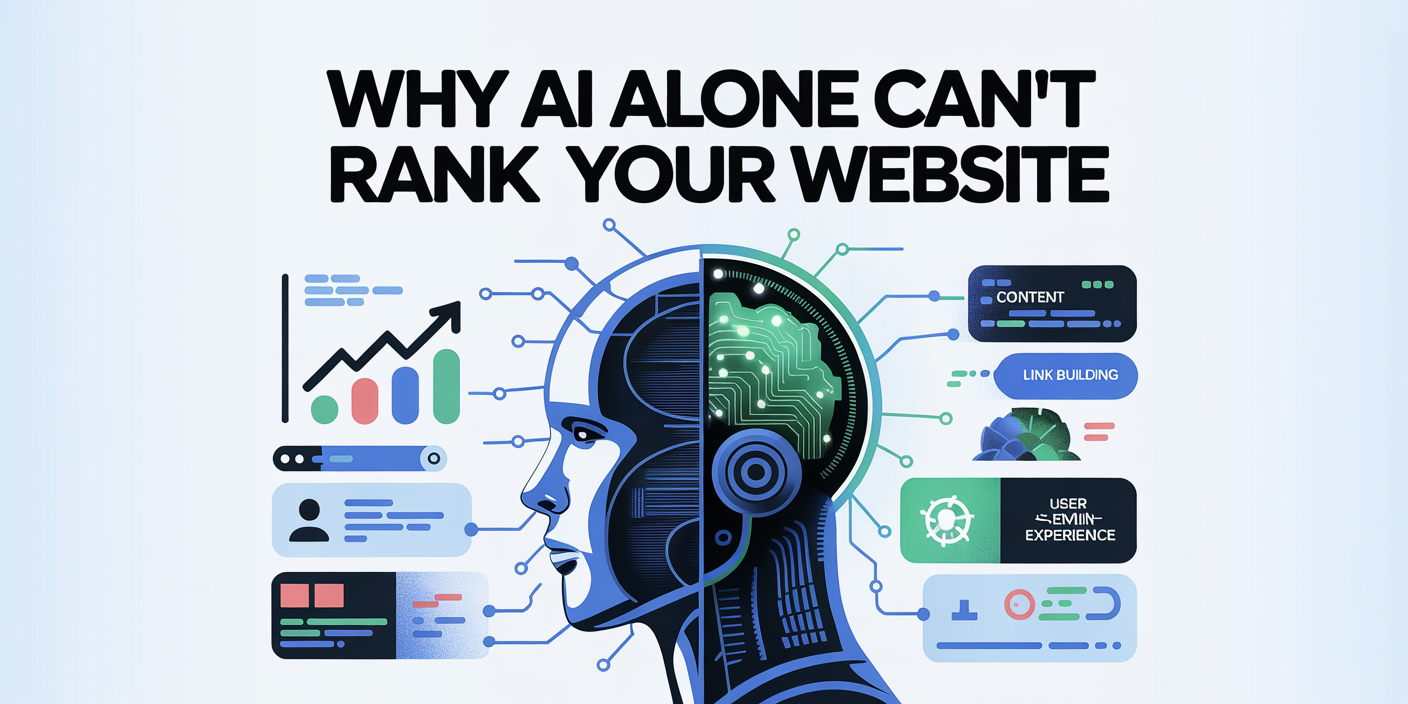
The reason is simple. AI can help create content, but it cannot replace a real SEO strategy. Search engines evaluate much more than text generation. They analyze intent, expertise, relevance, and user satisfaction.
Understanding why AI alone cannot rank your website is the first step toward building content that actually performs.
How AI Is Changing Content Creation
AI writing tools have become extremely popular among bloggers, marketers, and website owners. These tools can generate full articles based on a simple prompt. For businesses that need to publish content regularly, the speed is appealing.
Many marketers depend on AI to handle repetitive tasks such as drafting outlines, summarizing information, or generating basic blog content. It reduces the time needed to produce articles and allows teams to scale their publishing schedule.
However, the convenience of automated content creation has also created a misunderstanding. Some people assume that publishing large amounts of AI generated content will automatically improve search rankings.
Search engines do not work that way. Ranking content involves far more than generating paragraphs of text.
How Search Engines Actually Rank Content
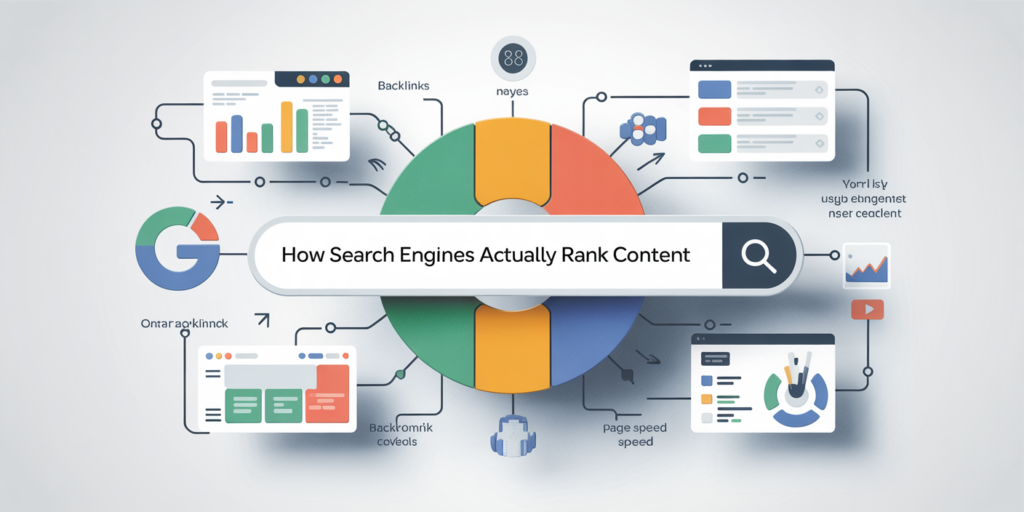
Search engines aim to provide the most useful answers to user queries. To do this, they evaluate multiple signals when ranking a page.
Understanding search intent
Every search query has an intent. Some users want information, others want to compare products, and some want to make a purchase. Content that matches the intent behind a search has a much higher chance of ranking well.
AI often struggles to interpret nuanced intent without clear direction from a human strategist.
Content quality signals
Search engines analyze the depth, clarity, and usefulness of content. Pages that provide unique explanations, detailed insights, and helpful examples usually perform better than generic summaries.
User engagement and experience
Metrics such as time on page, click behavior, and bounce rate help search engines understand whether visitors find the content valuable.
Topical authority and expertise
Websites that consistently publish knowledgeable and reliable information within a topic build authority over time. This authority signals trust and improves ranking potential.
AI tools alone cannot build this level of expertise.
Limitations of AI Generated Content
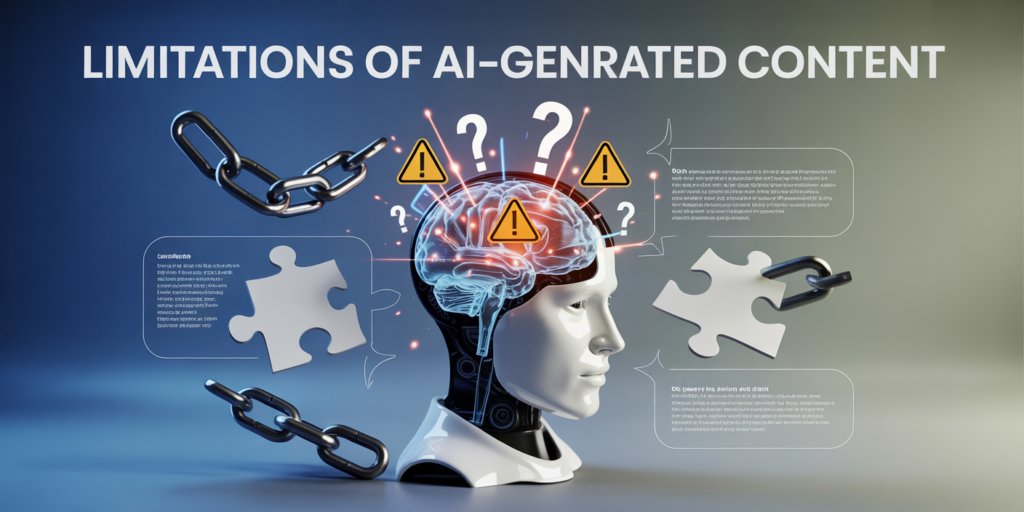
AI can produce text quickly, but it has several limitations that affect search performance.
Lack of original insight
AI models generate content by predicting patterns based on existing information. This often leads to articles that repeat commonly available ideas without adding new value.
Original insights, real experiences, and expert commentary are difficult for AI to create on its own.
Generic information and repetition
Many AI generated articles follow predictable structures and contain similar explanations. When multiple websites publish nearly identical content, search engines struggle to find a reason to rank one page above another.
Weak topic authority
Authority grows from consistent expertise and thoughtful analysis. AI generated content often covers topics at a surface level without demonstrating deep understanding.
Limited understanding of audience context
A human writer understands audience concerns, questions, and emotions. AI can mimic conversation but cannot fully interpret cultural context, evolving trends, or user behavior patterns.
These limitations make it difficult for purely automated content to stand out in competitive search results.
Why Human Expertise Still Matters in SEO
Human involvement remains essential in building content that ranks well.
Strategic keyword research
Effective SEO begins with identifying the right topics and search queries. Human strategists analyze search intent, competition, and audience needs to choose keywords that align with real opportunities.
Creating unique perspectives
Readers and search engines value content that offers new ideas or deeper explanations. Personal experience, industry knowledge, and original analysis create content that feels authentic.
Building trust and credibility
Reliable sources, accurate facts, and clear explanations help establish credibility. Human editors can verify information and ensure the content reflects expertise.
Editorial improvement and fact checking
Editing strengthens structure, clarity, and tone. A well edited article becomes easier to read and more engaging for visitors.
These elements are difficult for AI to manage without human guidance.
How to Use AI the Right Way for SEO
AI can still be extremely useful when integrated into a thoughtful workflow.
Use AI for research and drafts
AI can help collect background information, organize ideas, and generate a rough draft quickly. This speeds up the initial stages of content creation.
Add human experience and examples
Writers should expand the draft by adding personal insights, real world examples, and deeper explanations.
Optimize structure and readability
Human editors can improve headings, transitions, and formatting so the article flows naturally.
Update content based on performance data
SEO content evolves over time. Reviewing analytics and updating articles ensures the content remains relevant and competitive.
This combination allows teams to benefit from AI efficiency while maintaining quality.
AI and Human Collaboration Is the Future of SEO
The most successful content strategies combine technology with human expertise.
AI acts as a productivity tool that speeds up research, brainstorming, and drafting. Human writers bring creativity, judgment, and insight that machines cannot replicate.
When these strengths work together, the result is content that is both efficient to produce and valuable to readers.
Search engines reward content that genuinely helps users. That level of usefulness almost always requires human involvement.
Final Thoughts
Artificial intelligence has changed the content creation process, but it is not a replacement for SEO strategy. Publishing automated articles without planning rarely leads to strong rankings.
Successful websites focus on quality, expertise, and relevance. They use AI to assist the workflow while depending on human knowledge to shape the final content.
The real advantage comes from combining both strengths. AI speeds up production. Human insight turns that production into content worth ranking.