
Every time you search for something online, you expect a result that matches your question. Right? To do that, search engines don’t just look for single keywords. They try to understand the real meaning behind words. Well, that used to be a method called Latent Semantic Indexing (LSI). LSI analyses how words co-occur across documents to spot patterns in language.
But today, things work differently. According to John Mueller at Google, “there’s no such thing as LSI keywords.” (Search Engine Roundtable) Instead of old-school LSI, Google now uses more innovative tools that read meaning, context, and the full scope of your writing. Still, including related words naturally can make your content more precise and more useful.
Below, I’ll discuss what LSI means, why it’s no longer being used, and what really matters today when writing for search engines. Please move into the next!
What Are LSI Keywords or LSI (Latent Semantic Indexing)?
Basically, LSI keywords are words and phrases that relate to your main topic. They help search engines understand what your content really means, even if you don’t repeat the main keyword many times. Usually, LSI comes from a method called latent semantic indexing. This method looks at how words appear together in large amounts of text. When certain words show up near each other often, the system sees them as connected.
Simply saying, LSI keywords are supporting words that help give your content full meaning. They show the topic from different angles. They also make your writing sound natural and complete. For example, if your main keyword is “running shoes,” LSI keywords could be:
- sports shoes
- cushioning
- arch support
- road running
- trail shoes
These words help explain that your page talks about more than one part of running shoes. However, LSI keywords are not fancy or hard to find. They are the words people already use when they talk about a topic. Search engines notice these words and use them to understand what your content is trying to explain.
Even though Google does not use true LSI technology today, the idea behind it still matters. Modern search engines look for meaning, not just one single word. So using related words helps your page fit better with real searches.
Does Google Use LSI in Their Algorithm?
No, Google does not use LSI as a ranking method today. Google does not use LSI today. LSI is an old method from decades ago. It was designed for small, limited document collections, not for the vast, ever‑changing Internet.
A key voice from Google, John Mueller, has publicly stated that “there’s no such thing as LSI keywords.” Because of that, calling certain words “LSI keywords” is misleading, since Google doesn’t treat them as a special ranking factor. Instead of LSI, Google uses modern tools to understand content.
These include natural language processing (NLP), machine learning, and algorithms that understand context, concepts, and semantic meaning not just matching of old‑style keyword lists. That said, using words that are related in meaning or context can still help your content.
When you write naturally and cover a topic fully, with phrases and words that people commonly use around that subject, you help Google understand your page better. But that’s not because LSI is at work it’s because modern semantic understanding and context matter in Google’s algorithm.
Why LSI Keywords Matter for SEO?

LSI keywords matter because they help search engines and readers understand your topic in a clear and natural way. They add meaning, support your main idea, and make your writing feel complete. Here is why they are important:
- LSI keywords help search engines understand your topic better: They add extra meaning around your main keyword. This helps Google see what your page is really talking about.
- They make your writing feel natural: When you use related words, your content sounds more like real speech. This keeps readers comfortable and engaged.
- They prevent keyword repetition: Using only one keyword again and again can make your writing feel stiff. LSI words let you explain the same idea in a smooth way.
- They help your page cover the full topic: A strong page explains the main idea and the smaller parts around it. LSI words help you touch on those smaller parts without going off-topic.
- They improve reader understanding: Related words guide readers through your message step by step. This makes the content easier to follow and remember.
- They help your page show up for more search terms: People search in different ways. LSI words help your page connect to many of those search styles.
- They help reduce confusion for search engines: Some keywords can mean more than one thing. LSI words show which meaning you are talking about.
- They support longer time on page: Clear writing keeps readers on your page longer.
Search engines see this as a sign that your content is useful. - They make your content look more complete: Pages with related words give a fuller picture of the topic. This makes your content more helpful to readers.
How To Find LSI Keywords?
Actually, finding LSI keywords means finding words and phrases related to your main topic. These words help Google understand your content and make your writing feel complete. You don’t need complicated tools to start there are simple ways anyone can use. Here are the main methods to find LSI keywords:
- Google Search Suggestions
When you type your main keyword into Google, the autocomplete suggestions show related searches.
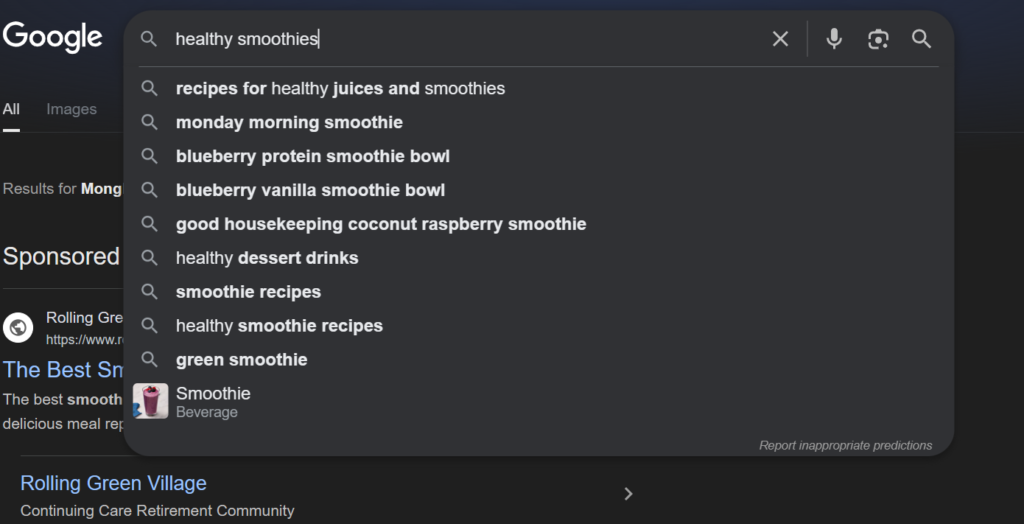
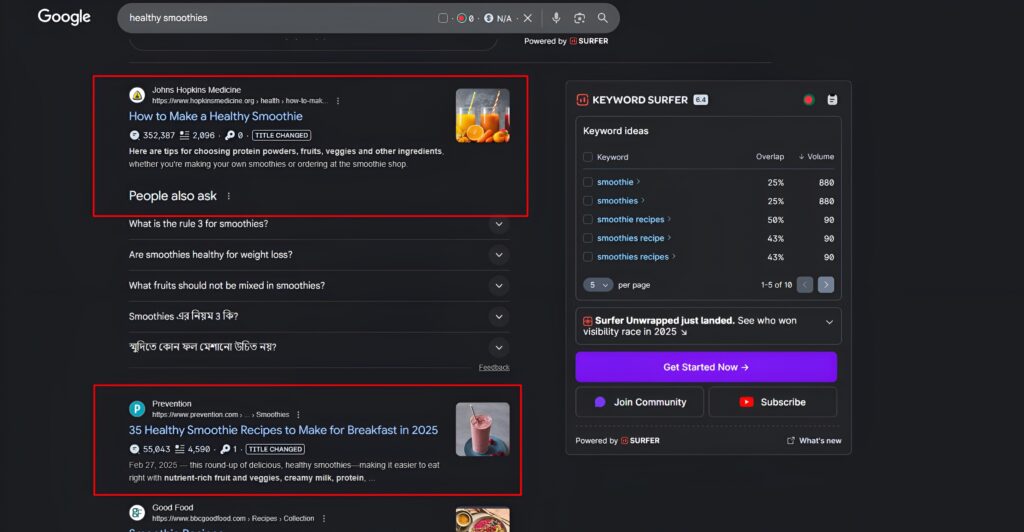
For example, if you search “healthy smoothies,” Google might suggest “ recipes for healthy juices and smoothie,” “ monday morning smoothie,” or “blueberry protein smoothie bowl” These suggestions are natural LSI keywords.
- Related Searches at the Bottom of Google
Scroll to the bottom of the search results page. You’ll see a section called “Searches related to [your keyword].”
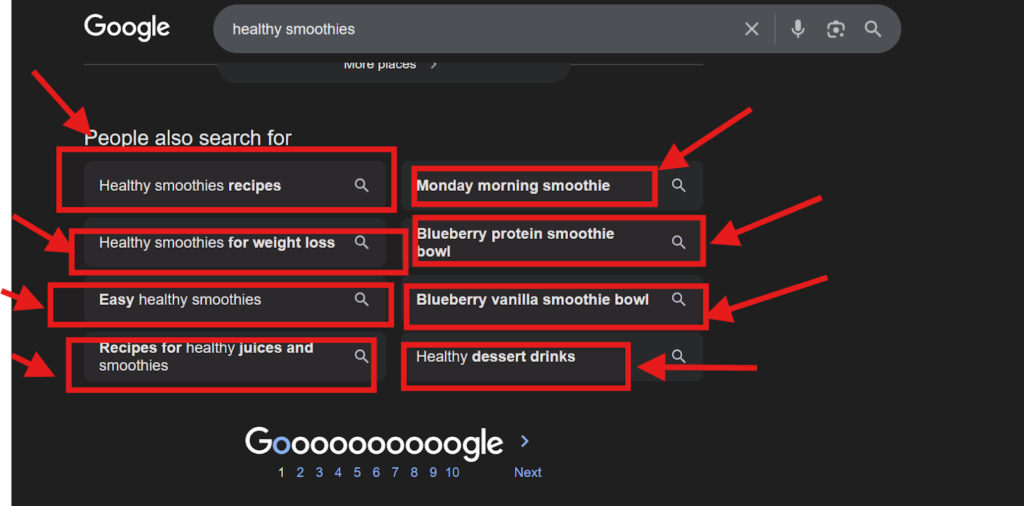
These phrases show other terms people search for around your topic.
- People Also Ask (PAA)
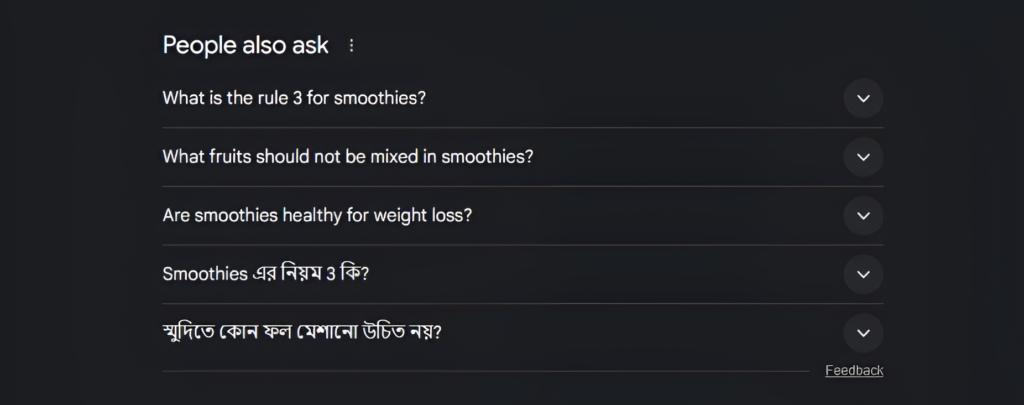
Google’s “People Also Ask” boxes list common questions connected to your keyword. Each question often contains useful LSI words.
- Analyze Competitor Pages
Look at top-ranking pages for your keyword. Notice the words and phrases they use repeatedly.
- Keyword Research Tools
Free and paid tools can generate related words and phrases. Tools like LSIGraph, SEMrush, Ahrefs, and Ubersuggest show words that often appear with your main keyword.
- Content Reading and Brainstorming
Read blogs, articles, or forums about your topic. Take note of repeated terms that naturally relate to your keyword. These words often become the best LSI keywords because people actually use them.
So, How Can You Use LSI Keywords in Content?
LSI keywords are words and phrases that relate to your main topic.They help Google understand the full meaning of your page and make your content more useful to readers. Using them correctly improves SEO, enhances readability, and prevents keyword stuffing.
1. Use LSI Keywords in Headings and Subheadings
Headings guide readers and organize your content. Adding LSI keywords in subheadings tells Google what each section is about. For example, if your main topic is “digital marketing,” subheadings could include:
- “Social Media Marketing Strategies”
- “Content Marketing Tips for 2025”
- “Email Marketing Best Practices”
Each heading contains related terms that support the main keyword. This helps both Google and readers quickly understand what each section covers.
2. Include LSI Keywords Naturally in Paragraphs
Sprinkle LSI keywords throughout your content. Avoid repeating your main keyword too often, which can feel forced. For example, if your main keyword is “home workout,” you can include:
- “bodyweight exercises”
- “dumbbell routines”
- “fitness at home”
These related words give context and make your content more informative. They also help your page rank for multiple related search terms.
3. Add LSI Keywords in Meta Descriptions
Meta descriptions summarize your page for search engines and users. Including LSI keywords makes the summary more descriptive and relevant. Example: For a page on “healthy smoothies,” a meta description could be: “Discover easy green smoothie recipes for weight loss, energy, and better digestion.” Here, “green smoothie,” “weight loss,” and “energy” are LSI keywords that support the main topic.
4. Use LSI Keywords in Image Alt Text
Alt text helps Google understand what an image is about. It also improves accessibility for visually impaired users. Example: If your page is about “organic gardening,” an image alt text could be: “Organic vegetable garden with tomatoes and carrots.” Words like “vegetable garden” and “organic” are related terms that strengthen context.
5. Incorporate LSI Keywords in URL Slugs and Internal Links
URLs and internal links show Google how pages are connected. Including related words helps with ranking and navigation. Example: A page URL for “healthy smoothie recipes” could be: www.example.com/smoothie-recipes/green-smoothies
Here, “green smoothies” is an LSI keyword supporting the main topic. Internal links can also use related terms. For example, a page about “digital marketing” could link to “content marketing tips” or “SEO basics.”
6. Keep the Content Flow Natural
The most important rule is readability. LSI keywords should fit naturally into sentences. Overusing them makes writing feel forced and lowers user experience. Google rewards content that is clear, helpful, and easy to read.
7. Cover the Topic Fully
Using LSI keywords helps you cover the topic from multiple angles. For example, if your main keyword is “travel insurance,” including terms like:
- “trip cancellation coverage”
- “medical emergencies abroad”
- “lost luggage claims”
These related words make the page comprehensive. Google prefers content that fully answers user questions, not just the main keyword. Using LSI keywords in headings, paragraphs, meta descriptions, images, URLs, and internal links improves your SEO naturally. They help Google understand the topic and make content more readable for users. The key is to place them naturally, maintain flow, and cover your topic fully.
But, What are The Impact of LSI Keywords on SEO?
In true words, LSI keywords have a big effect on SEO because they help search engines understand the full meaning of your content. They show Google that your page is not just about one word, but covers a complete topic.
- Better Content Relevance
Pages using LSI keywords often match a wider range of search queries. For example, a page about “digital cameras” that also mentions “DSLR,” “lens,” “ISO settings,” and “photo resolution” signals to Google that it covers the whole topic.
- Higher Rankings for Related Searches
Using related terms allows your page to appear in multiple search results. For example, “dog training tips” can also rank for searches like “puppy obedience” or “house training dogs” because these LSI terms are included naturally.
- Improved User Experience
Content with LSI keywords is usually easier to read and more informative. Readers stay longer, which reduces bounce rate. Google tracks this behavior and rewards pages that are useful.
- Supports Semantic Search
Modern search engines use semantic understanding to connect search intent with content. LSI keywords help your page match user queries even if they use different words than your main keyword.
- Natural Keyword Variation
Instead of repeating one keyword many times, LSI keywords give variety while keeping the topic clear. This prevents keyword stuffing and improves content quality.
Examples of LSI Keywords
LSI keywords are related words or phrases that appear naturally around your main topic. Here are some examples for popular topics:
- Main Keyword: Coffee- LSI Keywords: espresso, latte, brewing methods, coffee beans, cappuccino, coffee shop
- Main Keyword: Fitness- LSI Keywords: workouts, strength training, cardio exercises, healthy lifestyle, gym routines
- Main Keyword: Travel Insurance- LSI Keywords: trip cancellation, medical coverage, flight delay, lost luggage, emergency assistance
- Main Keyword: SEO- LSI Keywords: search engine ranking, keywords, backlinks, content optimization, meta description
- Main Keyword: Gardening- LSI Keywords: soil, fertilizers, planting, irrigation, vegetable garden, pruning
These examples show how LSI keywords give context to the main topic. They help Google understand the page’s content and improve ranking potential for related searches.
Final check
All and all, LSI keywords may not be a direct ranking factor, but they still help your content feel clear and complete. They guide readers, and they help search engines understand your topic better. In fact, when you use them in a natural way, your writing becomes smoother, easier to follow, and more helpful.
Also, you don’t need long lists or fancy tools. You just need to know your topic well and use related words that fit the story you’re telling. This keeps your content strong and gives Google the right signals about your page.
In the end we can say, good writing, clear ideas, and natural language matter most. LSI keywords only support what you already want to do: create helpful content that answers real questions.


